(*) Ersatz: substitute product.
Replacing the A441N double-grid tube
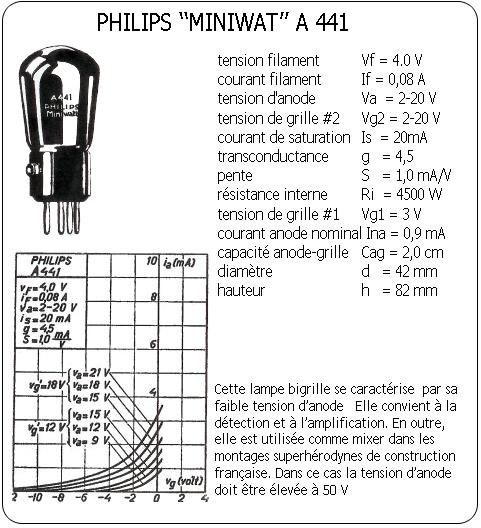
This legendary A 441 tube is one of the first double-grid tubes. It
allowed mixing the reception frequency and the local oscillator frequency
to obtain the intermediate frequency in the first
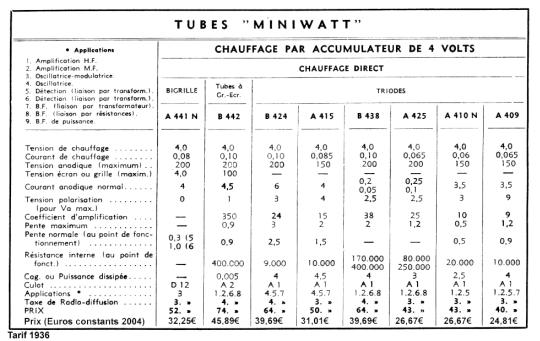
superheterodyne circuits. Its characteristics are
summarized below. It has become rare and therefore expensive. Moreover,
whether one owns one or two, there is hesitation in installing them during
the tests of vintage radios being restored. It is tempting to
replace it with an "ersatz" as they said on the other side of the Rhine.
Some believe that this substitute must be based on an electronic tube
(for example, a pentode); the less purist will opt for the solution
based on semiconductors proposed below.
Transistorized Ersatz for the A441N double-grid tube
(M. Mur)The schematic below by M. Mur allows the construction of a biFet transistor ersatz
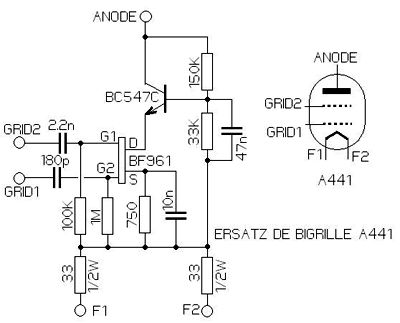
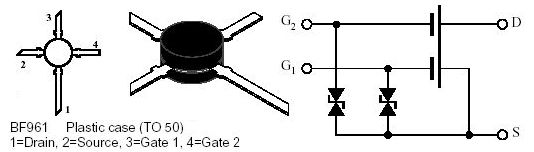
fig.1 BiFet transistor Ersatz
Replacing an A441N with a Russian 2Ж27Л(2SH27L) tube
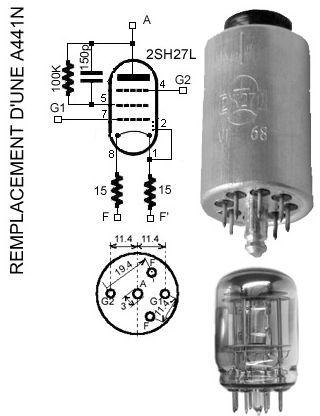
This tube is heated at 2.2V/57mA. It is necessary
to drop 1.8V with 31 Ω, distributed across the 2 filament terminals by
2 resistors of 15 Ω (¼w). Restorers who practice
this type of substitution remove the tube's envelope
(delicate operation). Today,
the most difficult thing is to obtain the Europe 5 pin socket. The 100K resistor,
which degrades the tube's slope, and the 150p capacitor
allow approximating the characteristics of the antique double-grid tube. This tube seems to be
easier to find in Germany.
Two datasheets, unfortunately only in Russian, can be consulted here.
Two datasheets, unfortunately only in Russian, can be consulted here.
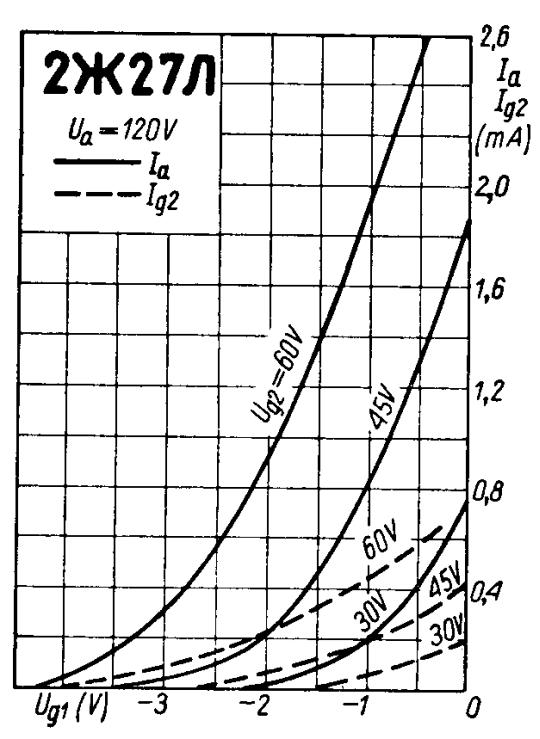 fig.1 2SH27L
 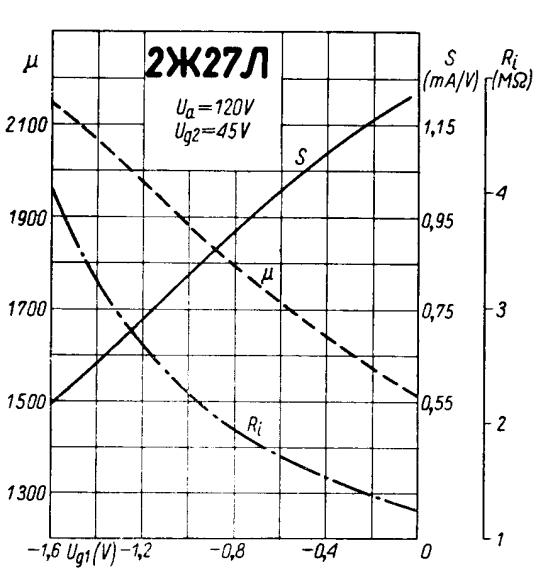 fig.2 2SH27L
 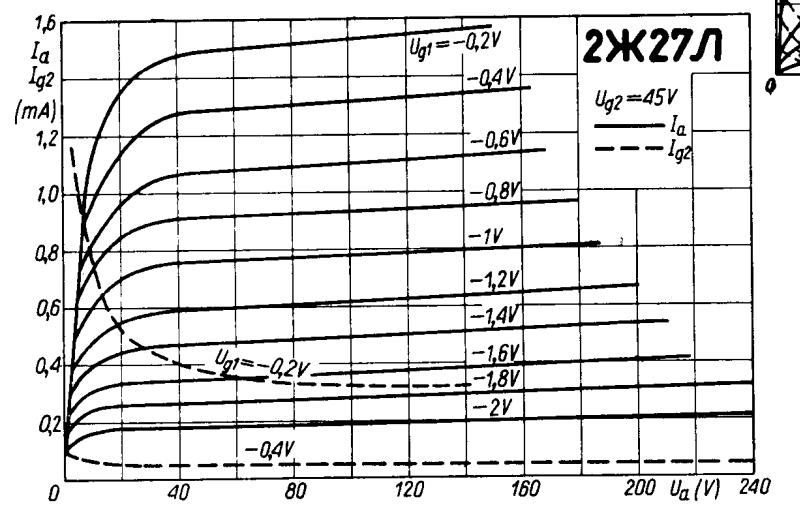 fig.3 2SH27L
 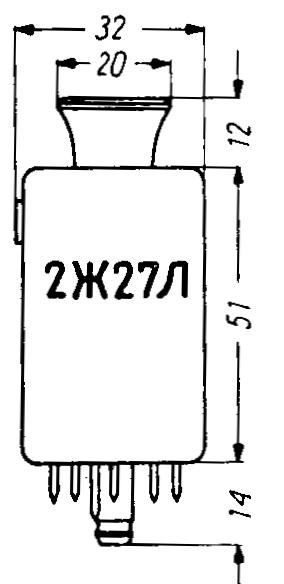 fig.4 2SH27L
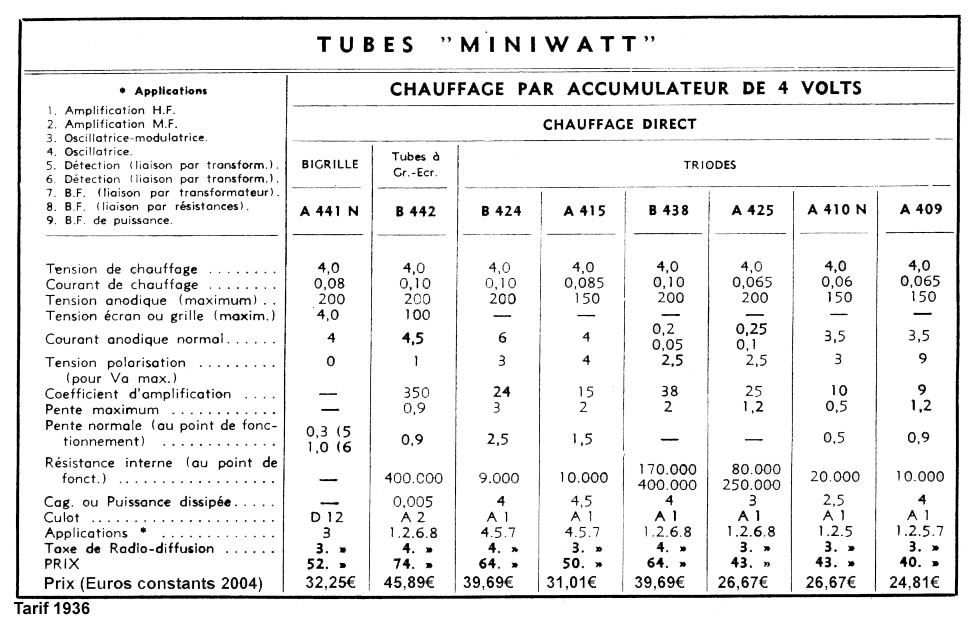
For information, the prices of European tubes in 1936 with the prices corrected in constant euros
(Click on the figure to enlarge)
(Click on the figure to enlarge)